Struggle Session: The Extremely Expensive Art of Pretending to Be Normal When You're Worth $300 Million
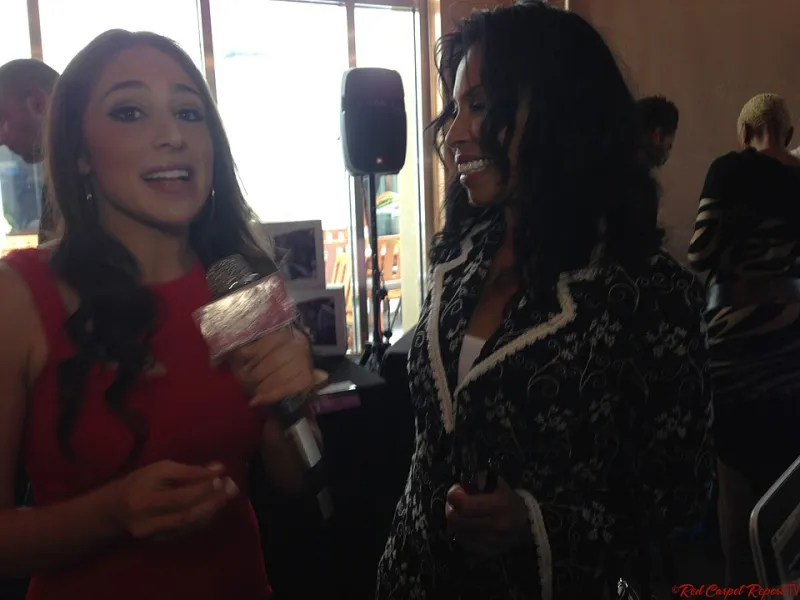
Photo: Mingle MediaTV, CC BY-SA 2.0, via Wikimedia Commons
Picture the scene. It's 2 a.m. The lighting is dim and slightly cinematic. Someone is hunched over a desk — or perhaps a custom-built recording console, or a screenplay printed on recycled paper — and they are working. They look tired. Beautifully, photographically tired, in the way that only people with access to very good skincare can look tired. The caption tells you they've been at this for sixteen hours straight. They are pouring their soul into their art. They are, the caption implies with the subtlety of a freight train, just like you.
The photo was taken by their personal photographer. The desk is in their $47 million Malibu home. The 'exhaustion' will be followed by a morning green juice delivered by a private chef. And the post will receive approximately 800,000 likes from people who genuinely appreciate the hustle.
Welcome to the relatability industrial complex, where struggle is the aesthetic and authenticity is the most expensive production value money can buy.
The Humble Brag Has Evolved
The humble brag is not new. Celebrities have been performing modesty since before the concept had a name. But the social media era has allowed it to metastasize into something genuinely spectacular in its audacity. The old version was a celebrity mentioning, in a magazine profile, that they 'sometimes forget' they're famous. The new version is a fifteen-part Instagram carousel documenting someone's 'vulnerable' journey through rejection and self-doubt, posted from a phone that costs $1,400, captioned with a quote from a therapist the vast majority of their followers couldn't afford.
The escalation has been gradual enough that we've somewhat normalized it. But step back and look at the architecture of the modern celebrity 'real talk' post and it becomes almost avant-garde in its contradictions. The content is relatability. The context is extreme wealth. The medium is a platform the celebrity uses to sell products. And the audience receives it, in overwhelming numbers, as genuine connection.
It's performance art. Very lucrative performance art.
The Rejection Story That Ends in a $200 Million Deal
One of the genre's most reliable formats is the celebrity rejection narrative. You've seen this one. A major star — someone with a net worth that has commas in places that would make your accountant dizzy — posts about the time they were told no. They were rejected from the role. The label passed on them. The publisher didn't see the vision. They almost quit.
The detail work in these posts is always immaculate. The specific memory of sitting in their car after the audition. The friend who talked them out of giving up (conveniently, this friend is never identified, keeping the focus squarely on the celebrity). The moment they decided to bet on themselves.
And then — and this is where the format reveals itself — the pivot. Because the rejection story is never just a rejection story. It's a redemption arc, and the redemption always involves a number. The role they got instead was bigger. The album they made anyway went platinum. The company they launched without outside investment is now valued at something with a 'b' in it.
The point of the vulnerability is the triumph. The struggle is the setup. The flex is the punchline. And the audience, having been invited into the emotional journey, feels invested in the victory rather than alienated by the scale of it.
That's not an accident. That's a content strategy.
The Anxiety Outfit
Let's talk about the 'I struggle too' mental health post, which has become its own distinct subgenre and deserves its own critical attention. The celebrity in question — photographed in what appears to be casual, unstudied clothing that a stylist spent two hours assembling — shares that they, too, experience anxiety. Imposter syndrome. The weight of expectation. The difficulty of being perceived.
None of this is necessarily untrue. Wealth does not immunize people from mental health challenges, and dismissing celebrity anxiety as fake would be both unkind and inaccurate. But there is something worth examining in the specific way these disclosures are packaged and delivered.
The outfit in the photo retails for $4,800. The 'casual' setting is a room that appears in Architectural Digest. The therapist referenced in the caption charges $600 a session and has a two-year waitlist. The book about mindfulness the celebrity recommends was written by their friend and is available through a link in their bio, where they earn an affiliate commission.
The anxiety is real. The infrastructure surrounding its disclosure is a content machine. Both things are true simultaneously, and the genius of the format is that pointing out the second thing makes you sound like you're dismissing the first.
The Late Night Work Post and Its Discontents
Back to our 2 a.m. scene, because it deserves more examination. The 'I was up until 4 working on this for you guys' post has become a staple of celebrity content, and it functions as a very specific kind of class performance.
For most people, working until 4 a.m. is not romantic. It's a symptom of financial pressure, insufficient staffing, or a job that doesn't respect boundaries. It is the thing they are trying to escape. But when a celebrity documents their late-night creative grind, it gets reframed as devotion — to the craft, to the fans, to the work. The suffering is aestheticized. The exhaustion becomes evidence of passion rather than evidence of a labor problem.
And here's the kicker: the celebrity in question has a team. They have an assistant, a manager, a creative director, a social media coordinator, and probably a person whose specific job is to make the late-night work session look appropriately cinematic for the post. The 'alone with my art at 2 a.m.' image is a collaborative production. The loneliness is staged. The struggle is a set.
The Audience Is in on It (Sort Of)
Here's where it gets genuinely interesting: a significant portion of the audience for this content knows exactly what it is and engages with it anyway. The comment sections under these posts are not uniformly credulous. There are the true believers, yes — people who find genuine comfort and inspiration in the celebrity's curated vulnerability. But there are also the ironic appreciators, the people who screenshot the $4,800 'casual' outfit and post it to Reddit, the TikTok creators who make gentle parody content about the genre.
Relatability content has, in a strange way, become entertainment in its own right — not because audiences believe it, but because the performance itself is compelling. The craft of making extreme wealth look like the universal human experience is, if you squint at it correctly, genuinely impressive. It takes skill to post a photo from inside a $20 million home and have it read as intimate rather than obscene.
Think of it as a magic trick. You know there's a trick. You watch anyway. You might even applaud.
What Would Actual Relatability Look Like?
Just as a thought experiment: what if a celebrity with generational wealth posted about what their life is actually like? Not the struggle version, not the humble version, but the accurate version. 'I woke up this morning and my housekeeper had already made breakfast. I have a car and driver. I haven't pumped my own gas since 2014. My accountant handles everything financial. I have not experienced a logistical inconvenience in approximately seven years.'
That post would probably go viral for entirely different reasons. It might even be more interesting than the rejection arc. It would certainly be more honest.
But it would not get 800,000 likes. And at the end of the day, that's the metric that matters.
The relatability post isn't for you — it's for the algorithm, and the algorithm, it turns out, rewards the performance of struggle just as much as the real thing.