The Interview Is Dead. Long Live the Carefully Curated Instagram Carousel.
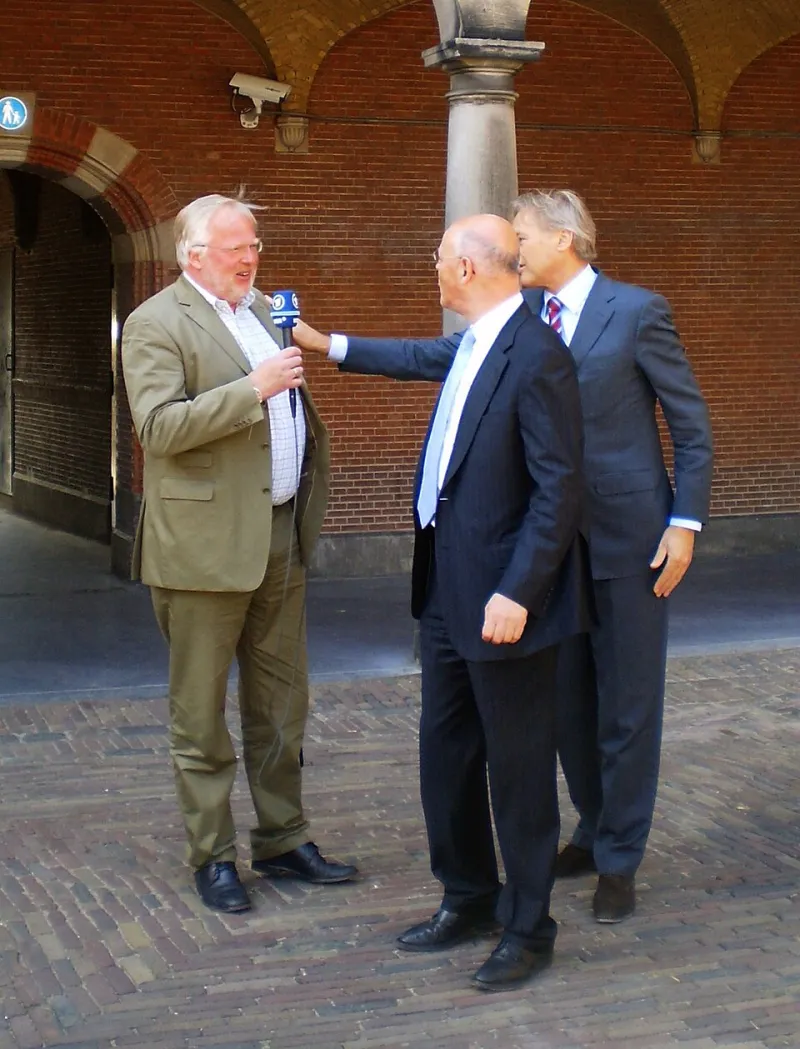
Photo: Apdency, Public domain, via Wikimedia Commons
There was a time — not even that long ago, relatively speaking — when a major celebrity interview was an event. You'd read the profile in Vanity Fair or Rolling Stone, or watch the sit-down on a late-night couch, and you'd learn something. Sometimes it was something the celebrity meant to tell you. Occasionally, it was something they absolutely did not.
That second category? Largely gone. And the first one is on life support.
The traditional celebrity interview — the access-driven, journalist-in-the-room, follow-up-question-permitted format that built entire media empires — is collapsing in slow motion, and both sides of the transaction are responsible for the mess.
How We Got Here
The shift didn't happen overnight, but the acceleration has been stunning to watch in real time.
For decades, the celebrity press machine ran on a simple exchange: studios and labels provided access to their talent in exchange for coverage. Journalists got quotes, publications got readers, celebrities got promotion. Everyone was slightly using everyone else, and it worked well enough that nobody examined it too closely.
Then a few things happened simultaneously, and the whole architecture started wobbling.
Social media handed celebrities a direct line to audiences that bypassed the press entirely. Why sit across from a journalist who might ask about your divorce, your last box office disappointment, or that thing you said in 2017, when you could post a three-photo carousel with a caption you wrote yourself, approved yourself, and published yourself at a time of your choosing? The risk-reward calculus changed completely.
At the same time, the media landscape fractured. The publications that once commanded enough cultural authority to make an interview genuinely valuable — the ones whose cover placement could move the needle on a film's opening weekend — lost ground to an ecosystem of newsletters, podcasts, YouTube channels, and social platforms where the celebrity is the publication.
And then there were the interviews that went wrong. Publicly, memorably, virally wrong.
The Viral Interview as Career Hazard
If you work in celebrity PR today, a significant portion of your anxiety is directed at a specific scenario: the moment a client says something unscripted, the clip gets extracted from context, runs at 1.5x speed on TikTok, and becomes the only thing anyone associates with your client for the next six months.
This has happened enough times now — and to enough high-profile people — that it has meaningfully changed how talent teams approach press. The instinct is no longer "let's get them out there" but "what's the minimum viable press we can do without creating a liability?"
The result is an interview circuit that feels increasingly stage-managed to the point of uselessness. Questions are pre-screened. Topics are embargoed. Junkets — those marathon press days where a celebrity does forty interviews in a hotel room, answering the same four approved questions forty times — have become the dominant format precisely because they're controllable. Nobody is going to ask you something unexpected when they have six minutes, a camera crew, and a publicist standing six feet away.
Long-form profiles still exist, but the access required to write one is harder to negotiate than ever. Celebrities and their teams now routinely demand copy approval, quote approval, or the right to review before publication — conditions that serious outlets have traditionally refused but are increasingly under pressure to accept or lose the interview entirely.
The Controlled Feed as Press Strategy
What celebrities have built in place of traditional press access is, in its own way, impressive — and slightly dystopian.
The Instagram grid, the TikTok series, the Substack letter (yes, celebrities have Substacks now), the YouTube documentary that the celebrity's own production company produced and distributed: these aren't supplements to traditional press, they're replacements for it. And they share one feature that no journalist can compete with — total editorial control.
When a major star posts a "day in my life" video that happens to go up the same week their new project drops, that's not a coincidence. When a celebrity shares a vulnerable, emotional post about a personal struggle and the comment section fills with supportive fans who then stream the album — that's not spontaneity, that's a content strategy with feelings attached.
None of this is necessarily dishonest. People are allowed to control their own narratives. But the cumulative effect is a celebrity media ecosystem where the "access" audiences receive is entirely curated by the subject, which is not really access at all. It's a press release with a filter.
What This Means for Entertainment Journalism
The outlets that used to depend on celebrity access are in a genuinely difficult position. Traffic models built on the assumption that a celebrity exclusive would drive clicks are collapsing as celebrities become their own exclusive sources. Publications are competing not just with each other but with the celebrities themselves.
Some have adapted by leaning into analysis, commentary, and the kind of contextual reporting that doesn't require a sit-down — the celebrity industrial complex can be written about without the celebrity's cooperation, and often more honestly. Others have moved toward the parasocial angle: covering celebrities through their own social media output, which is ironic but also practically inevitable.
The celebrity profile isn't extinct yet, but the version where a journalist spends three days with a star and writes something genuinely revealing? That's become almost a novelty — something that happens rarely enough to be remarkable when it does.
The Audience Is Noticing
There's a subtle but real shift in how audiences engage with celebrity content, and it tracks with this trend. The parasocial intimacy that celebrities cultivate through their own channels — the "real me" energy of a casual Story or a voice-note caption — creates a sense of closeness that traditional press never manufactured. Fans feel like they know their favorite celebrity, personally, because the celebrity told them so directly.
But that intimacy is engineered. And when audiences occasionally bump up against that reality — when a candid moment turns out to be a sponsored post, or a "personal" essay turns out to have been written by a ghostwriter, or a live Q&A turns out to have pre-selected questions — the dissonance is jarring.
The traditional interview, for all its limitations and staging, at least involved a third party whose job was to push back. The self-published content ecosystem has no such check.
When the celebrity is the journalist, the editor, and the publisher, the only thing missing is someone to ask the question they don't want to answer — and that's not an accident.