Sorry Not Sorry: Hollywood's Non-Apology Industrial Complex Is Running Out of People to Fool
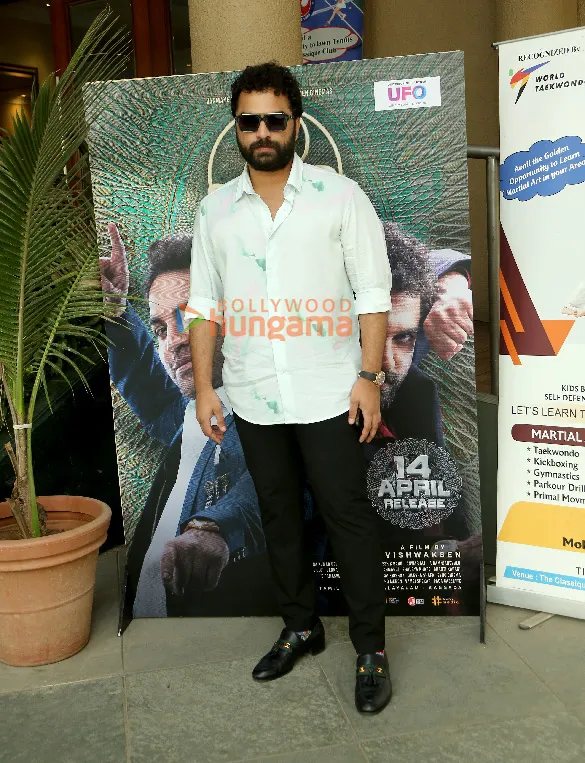
Photo: Bollywood Hungama, CC BY 3.0, via Wikimedia Commons
It usually drops on a Friday afternoon. The Notes app screenshot. The carefully kerned Instagram caption. The unprompted statement from a publicist who insists their client wanted to "address this directly." A celebrity did something — said something, posted something, was photographed somewhere they shouldn't have been — and now, after seventy-two hours of brand-damaging silence and a team meeting that definitely involved a crisis communications consultant, they are Ready To Apologize.
Except they're not. Not really. And increasingly, the internet is done pretending otherwise.
The non-apology apology — that slippery, workshopped, accountability-adjacent statement that sounds contrite if you skim it but dissolves into nothing the second you actually read it — has become one of Hollywood's most refined art forms. And 2024 and 2025 have given us more material than ever to work with.
The Anatomy of a Statement That Says Absolutely Nothing
Let's establish the taxonomy, because there are subspecies here and they deserve names.
First, there's the Passive Acknowledgment: "Mistakes were made." Nobody made them. They just... happened. Like weather. Like continental drift. The celebrity was simply nearby.
Then there's the Empathy Redirect: "I'm sorry if anyone was hurt by my words." The word "if" is doing the work of an entire legal team in that sentence. It introduces hypothetical harm — the suggestion that maybe nobody was actually bothered, but just in case some particularly sensitive souls took issue, the celebrity is generously acknowledging that possibility.
Closely related is the Receiver-Blamed Apology, perhaps the most insulting of all: "I'm sorry you felt that way." You, the person who was wronged, are now responsible for your own feelings about being wronged. The celebrity is merely a neutral party who happened to be in the room when your feelings decided to get hurt.
And finally — the crown jewel — the Growth Pivot: "I've done a lot of work on myself since then and I'm not that person anymore." This one is particularly effective because it's almost impossible to argue with. How do you dispute someone's inner journey? You can't. That's why publicists love it. It's unfalsifiable, it's sympathetic, and it neatly sidesteps the question of whether anyone received an actual apology or any form of restitution.
The Backlash Math Nobody's Doing
Here's the part that should concern the celebrities deploying these statements more than it apparently does: the non-apology frequently generates more public anger than the original incident.
This is not a new phenomenon, but the acceleration is striking. What used to take weeks to simmer — fans dissecting a statement, journalists pulling quotes, commentators writing explainers — now happens in approximately four hours on social media. By the time a PR team thinks they've managed a story with a carefully worded release, Twitter (yes, fine, X — but we're calling it Twitter) has already done a word-by-word autopsy and posted the results.
The phrase "I'm sorry you felt that way" has become so culturally loaded that celebrities who use it are now essentially advertising that they hired a publicist who last updated their playbook in 2015. Audiences have been educated. They've read the think pieces. They know what passive voice means in an apology. They know that "hurtful to some" means "I think most people agree with me actually."
And yet the statements keep coming, formatted the same way, hitting the same beats, landing with the same thud.
The Publicist's Dilemma (That Publicists Created)
To be fair — and we are occasionally fair here at Velour Digest — the people crafting these statements are operating in a genuinely difficult environment. A full, unambiguous apology opens the door to legal liability. Admitting wrongdoing in a public statement can be used against a client in civil proceedings. There are real reasons, beyond simple arrogance, why entertainment lawyers advise against the words "I was wrong and I caused harm."
But there's a difference between legally cautious and performatively hollow, and somewhere along the way, the industry stopped distinguishing between the two. The lawyered-up non-statement became the default setting not just for legally sensitive situations, but for everything — including controversies where no litigation is remotely on the table and a genuine, human acknowledgment of fault would actually work better.
Industry insiders will tell you — and have told publications ranging from The Hollywood Reporter to various podcast circuits — that the calculus has shifted. A-listers and their teams increasingly treat apologies as brand management exercises rather than interpersonal acts. The question isn't "what do I owe the people I hurt?" It's "what statement minimizes damage to Q Score while appearing to demonstrate emotional intelligence?"
Those are very different questions. The answers look completely different too, and audiences can tell.
The Ones Who Got It Right (And Why It Worked)
For contrast, consider the apologies that actually landed — the ones that didn't generate a second news cycle of outrage. They share a few things in common: specificity (naming what was done, not vague gestures at "mistakes"), directness (no passive voice, no hypothetical harm), and an absence of the immediate pivot to how much the celebrity has grown since then.
The growth narrative, specifically, is worth examining. It's not that personal growth is fake or unimportant — it's that centering your own transformation in an apology makes the apology about you. The person you harmed is now a supporting character in your redemption arc. That's not accountability. That's a rebrand with extra steps.
What Comes After the Statement Nobody Believed
The uncomfortable truth the industry hasn't fully reckoned with is that the non-apology playbook is burning through its own effectiveness. Each iteration trains audiences to be more skeptical of the next one. Each Notes app screenshot that gets ratio'd on arrival makes the next celebrity think twice — or it should.
What's replacing it, in some corners, is radical silence (the hope that the news cycle simply moves on, which sometimes works) or the opposite extreme: the unfiltered, unscripted, slightly chaotic live response that reads as genuine precisely because it hasn't been workshopped to death.
Neither is a perfect strategy. But at least one of them doesn't insult the intelligence of everyone reading it.
The celebrity apology isn't dead — it's just that the version we've been getting isn't actually an apology, and everyone finally knows it.
If your statement requires a linguistics degree to decode, it might be time to consider that the problem isn't the audience's reading comprehension.